Summer of 1918
The Summer of 1918 is the most bloody and terrible season of the war for Paul Bäumer and his remaining comrades. Every man knows they are losing. They are falling back, unable to attack again after the big offensive, with no more men and no more ammunition. Yet the campaign goes on, and the dying goes on. This is the season when hope, in its most agonizing form, brushes against the scorched fields, only to be crushed by the overwhelming force of the enemy.
The Weight of Superior Force
The material disparity becomes crushing. For every one German plane, at least five English and American planes appear. For one hungry, wretched German soldier come five of the enemy, fresh and fit. For one German army loaf there are fifty tins of canned beef over there. The German soldiers are not beaten as soldiers—they are better and more experienced—but they are simply crushed and driven back by overwhelming superior forces. The tanks, once a mockery, have become a terrible weapon, rolling on in long lines, embodying the horror of war. They are machines, their caterpillars running on as endless as the war itself, annihilation without feeling, invulnerable steel beasts squashing the dead and the wounded. Against their colossal weight, the soldiers' arms are sticks of straw, their hand-grenades mere matches.
The Body's Dissolution
The physical condition of the German troops deteriorates catastrophically. They are emaciated and starved. Their food is bad and mixed with so much substitute stuff that it makes them ill. Dysentery dissolves their bowels; the latrine poles are always densely crowded with grey, yellow, miserable, wasted faces. The factory owners in Germany have grown wealthy while the soldiers' bodies are consumed by colic. The artillery is fired out, with too few shells and barrels so worn that they shoot uncertainly, scattering widely even onto their own positions. The fresh troops are anaemic boys in need of rest, who cannot carry a pack but merely know how to die by the thousands. They understand nothing about warfare; they simply go on and let themselves be shot down. A single flyer routed two companies of them for a joke, just as they came fresh from the train, before they had ever heard of cover.
The Last of the Class
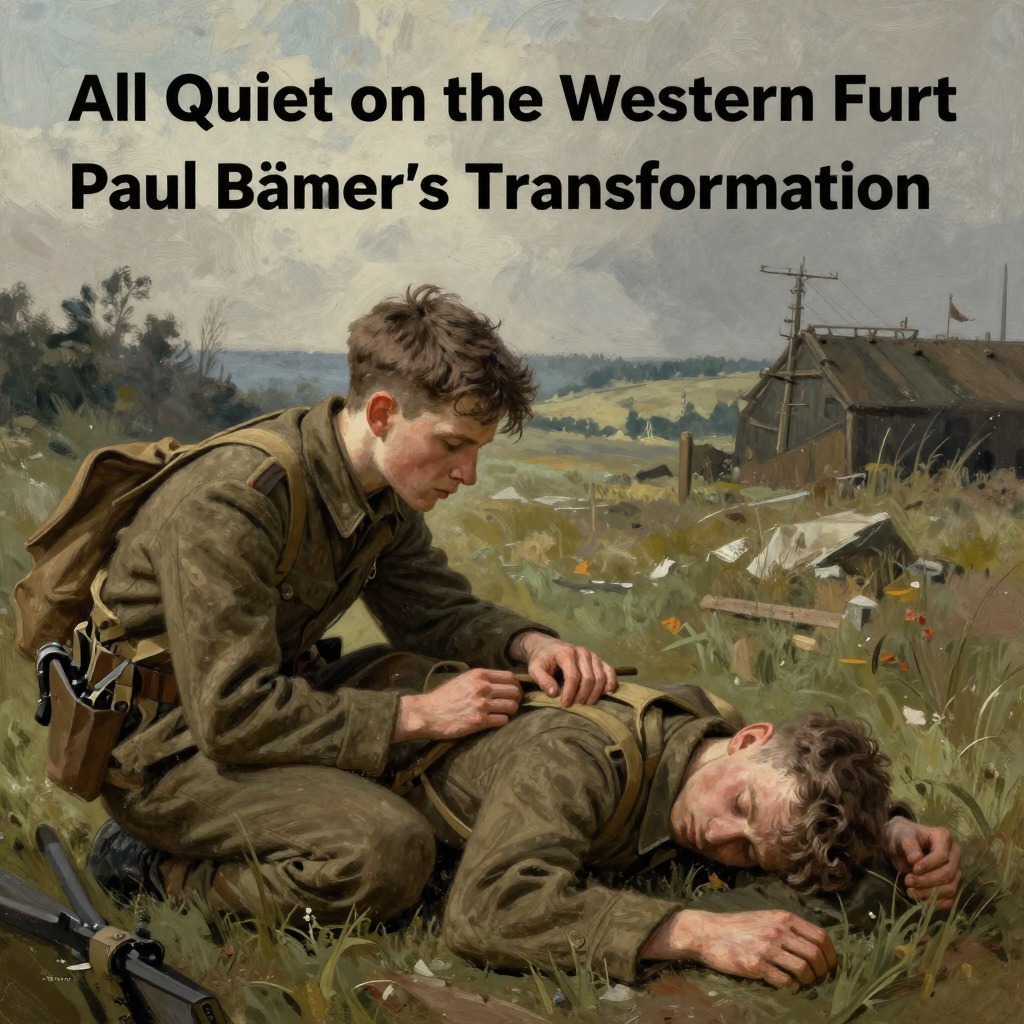
It is during this summer that the last of Paul's original classmates fall. Müller is shot point-blank in the stomach with a Verey light. He lives for half an hour, quite conscious, in terrible pain. Before he dies he hands over his pocket-book to Paul and bequeaths him his boots—the same boots he once inherited from Franz Kemmerich. Paul wears them now, and has promised them to Tjaden after him. Then, while bringing food, Kat falls. Paul binds up his wound, takes Kat on his back, and carries him to the dressing station. But on the way, without Paul noticing, a tiny stray splinter has caught Kat in the head. When Paul arrives, Kat is stone dead. Paul is left as the last of the seven fellows from his class.
The Agony of Hope
Wild, tormenting rumours of an armistice and peace fill the air. They lay hold on the soldiers' hearts and make the return to the front harder than ever. Never was life in the line more bitter and more full of horror than in the hours of the bombardment, when blanched faces lie in the dirt and hands clutch at the one thought: No! Not now! Not now at the last moment! The breath of hope sweeps over the scorched fields, a raging fever of impatience, of disappointment, of the most agonizing terror of death, an insensate question: Why? Why do they make an end? And why do these rumours of an end fly about? The summer of 1918 is a season of silent suffering, of the most desperate clinging to life even as life is being systematically annihilated.
The Final Stillness
Paul himself has fourteen days' rest because he has swallowed a bit of gas. He sits the whole day long in the little garden in the sun. He believes the armistice is coming soon. But his thoughts stop and will not go any farther. All that meets him, all that floods over him are but feelings—greed of life, love of home, yearning for the blood, intoxication of deliverance—but no aims. He knows that if they return now, they will be weary, broken, burnt out, rootless, and without hope. He is so alone, and so without hope that he can confront the months and years without fear. He fell in October 1918, on a day that was so quiet and still on the whole front that the army report confined itself to the single sentence: All quiet on the Western Front. He had fallen forward and lay on the earth as though sleeping. His face had an expression of calm, as though almost glad the end had come.